Google.org $12M AI Fund Expansion Signals a New Era for Inclusive Tech in Asia Pacific
Google.org $12M AI Fund Expansion Signals a New Era for Inclusive Tech in Asia Pacific – A Strategic Push for AI Equity
Google.org’s announcement on May 5, 2025, of a $12 million expansion to its AI Opportunity Fund in the Asia Pacific (APAC) region marks a pivotal moment in the global race to democratize artificial intelligence. This infusion, detailed in a statement from Google.org, allocates $10 million to the Asian Venture Philanthropy Network (AVPN) to train 720,000 workers and 100,000 micro, small, and medium-sized enterprises (MSMEs), and $2 million to Infoxchange to equip 10,000 nonprofits with AI tools, including new Gemini features integrated into Google for Nonprofits products. The initiative targets a region where MSMEs constitute 96% of businesses and employ up to 80% of the workforce, yet face significant barriers to AI adoption due to limited training, digital infrastructure, and financial resources.
While philanthropic in nature, the initiative also aims to address a widely acknowledged gap in AI accessibility across APAC’s economic landscape. A new AVPN report reveals that while 58% of APAC residents are excited about AI’s potential, only 15% have received training, and most are unaware such programs exist. “A shift towards an AI-powered economy needs to be fair and inclusive, so all workers have the necessary knowledge and tools to participate,” Google.org stated. By focusing on localized training for diverse groups—from rural Indian solopreneurs to Singapore’s migrant domestic workers and Japan’s caregivers for people with disabilities—the fund aims to bridge this divide.
The Economic Imperative of AI Inclusion
The economic stakes in APAC are immense. With a workforce of 2 billion, the region is a mosaic of languages, cultures, and economic contexts. MSMEs, the backbone of this economy, are particularly vulnerable to being left behind in the AI revolution. Research cited by Google.org highlights that these enterprises struggle with skill development due to inaccessible training and inadequate digital infrastructure. The consequences of inaction are stark: without intervention, the digital divide could exacerbate inequality, leaving millions unable to participate in an AI-driven economy.
Google.org’s strategy is to leverage partnerships with organizations like AVPN and the Asian Development Bank (ADB) to deliver tailored AI training. The fund’s first phase supports 49 social impact organizations, selected through AVPN’s open call, to provide practical AI applications suited to local needs. For instance, in Thailand, the Sea-Lion LLM enabled a Bahasa Indonesia-speaking worker to file a labor complaint in Thai—highlighting how localized AI tools can support marginalized communities. While not directly funded by Google.org, such use cases reflect the broader potential of inclusive AI. Such initiatives align with broader trends in the region, where AI is increasingly integrated into verticals like manufacturing, logistics, and urban development to drive efficiency and innovation.
The $2 million grant to Infoxchange further underscores the role of nonprofits in this ecosystem. By equipping 10,000 organizations with AI tools, Google.org is enabling these groups to amplify their social impact—whether through predictive analytics for disaster response or automated data processing for community services. This aligns with the growing adoption of AI in smart cities and IoT applications, where nonprofits can use data-driven insights to address urban challenges like traffic congestion or energy efficiency.
Regional AI Innovations Amplify the Narrative
Google.org’s initiative does not exist in a vacuum. It intersects with a vibrant APAC AI landscape, exemplified by Singapore’s Sea-Lion large language model (LLM) and Malaysia’s Krenovator platform. Sea-Lion, launched in December 2023 with $70 million in funding from Singapore’s National Research Foundation, has garnered 235,000 downloads and adoption by enterprises like Indonesia’s GoTo Group. Its latest iteration, Sea-Lion v3.5, boasts a 128,000-token context window and hybrid reasoning capabilities, making it a versatile tool for multilingual applications in logistics, finance, and telecommunications. “Sea-Lion is showing real promise in complex AI-driven solutions,” said Ying Shaowei, chief scientist at Singtel’s NCS, highlighting its role in enterprise workflows.
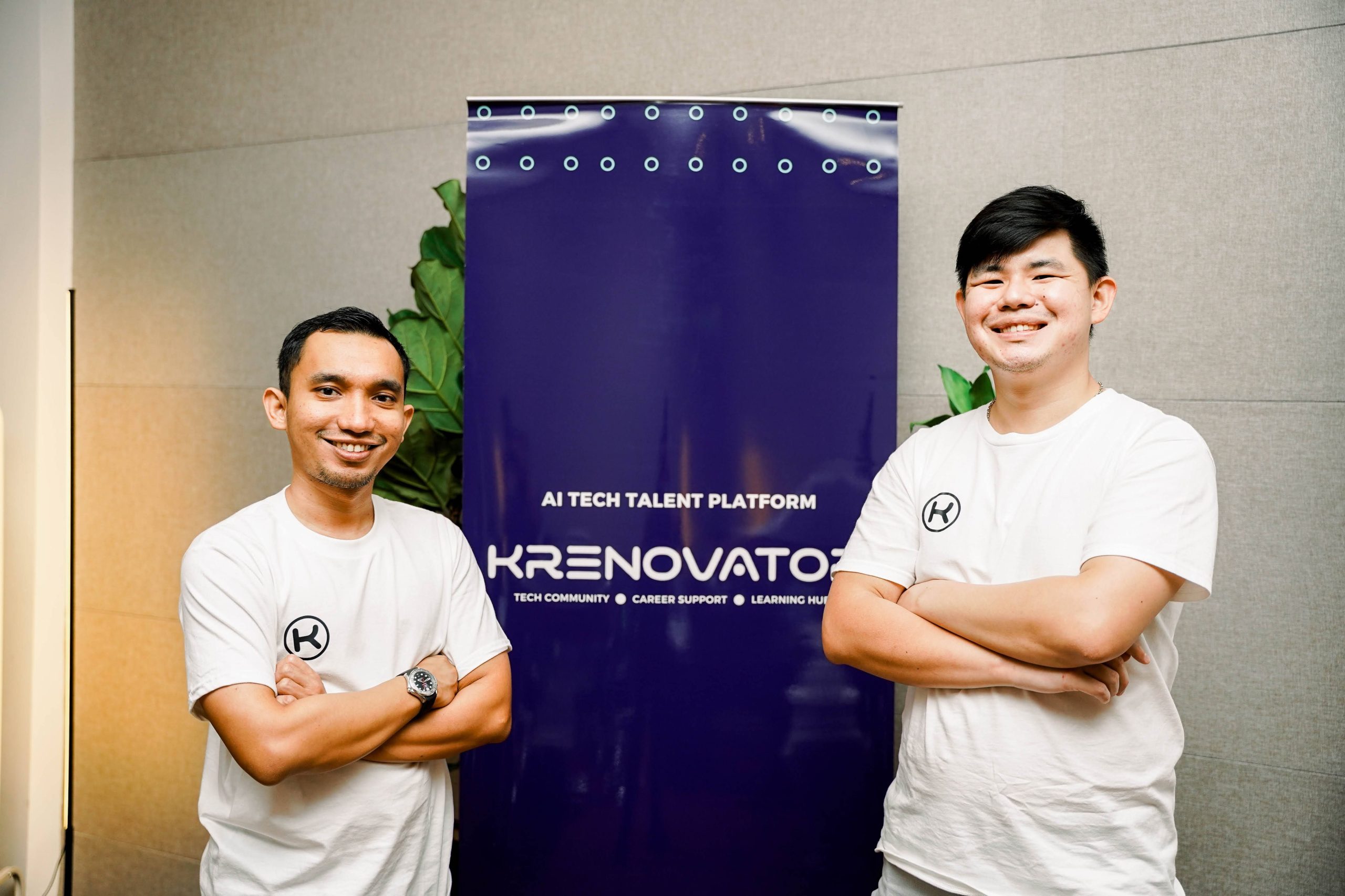
Image of the Krenovator Technology Sdn. Bhd., Copyright Technode
Similarly, Krenovator, a Kuala Lumpur-based AI-powered tech talent platform, secured seed funding from Ignite Asia in early 2025 to expand its pool of 30,000 tech professionals across Malaysia and Indonesia. “Our AI-powered platform gives us an unparalleled advantage in sourcing top-tier tech talent,” said CEO Mahadhir Yunus. Krenovator’s focus on connecting enterprises with skilled workers in manufacturing, logistics, and finance complements Google.org’s mission to upskill APAC’s workforce. These parallel efforts suggest a regional momentum toward a broader shift many governments and companies are preparing for, with Google.org’s fund positioned to potentially accelerate this shift.
Challenges and Uncharted Territory
Despite its promise, the AI Opportunity Fund faces significant challenges. The diversity of APAC’s workforce—spanning linguistic, cultural, and economic divides—requires highly localized solutions, which are resource-intensive to develop and scale. Moreover, the rapid pace of AI advancement, as seen in innovations like Xiaomi’s MiMo-7B and DeepSeek’s Prover-V2 models, raises questions about whether training programs can keep up. Xiaomi’s MiMo-7B, released on April 30, 2025, claims to outperform OpenAI’s o1-mini in coding and math tasks, while DeepSeek’s Prover-V2 is designed for advanced mathematical theorem proving. These developments, reported by SiliconANGLE, underscore the need for continuous learning to ensure workers remain competitive.

Image copyright of Xiaomi Office by Newsbyteapp
Another concern is the potential for AI to exacerbate inequality, a risk highlighted by the International Monetary Fund’s 2024 report, which noted that AI could affect 40% of global jobs. In APAC, where temporary and contract workers are prevalent, automation could displace vulnerable groups. Singapore’s DBS Bank, for instance, announced on February 25, 2025, plans to cut 4,000 temporary roles over three years due to AI adoption, though it expects to create 1,000 new AI-related jobs. “AI will likely worsen overall inequality,” warned IMF managing director Kristalina Georgieva, emphasizing the need for inclusive strategies like Google.org’s.
Looking ahead through a dubious speculative lense, some analysts suggest that the fund’s long-term impact could increase if aligned with emerging technologies like 5G/6G and digital twins—though such integration remains speculative and is not currently part of the fund’s public roadmap. For example, in the future, AI-powered digital twins could optimize supply chains in logistics—but only if the workforce is trained to use such tools. Without evolving alongside emerging technologies, training programs risk becoming less relevant over time.
A Blueprint for Global Impact
Google.org’s $12 million expansion is more than a regional initiative; it could serve as a blueprint for how philanthropy can drive systemic change in the AI era. By targeting MSMEs, nonprofits, and underserved communities, the fund addresses the human element of technological progress, ensuring that AI’s benefits are not confined to tech elites. Its emphasis on localized training and practical applications sets a precedent for other regions grappling with similar challenges.
The initiative could have broader implications for global enterprises operating in APAC, particularly in sectors where AI-trained talent is increasingly vital. Companies in manufacturing, logistics, and smart city development can leverage a more skilled workforce to adopt AI-driven solutions, from predictive maintenance in factories to real-time traffic management in urban centers. Moreover, the fund’s support for nonprofits could inspire new models of public-private collaboration, where AI is harnessed for sustainable development goals like climate resilience and equitable access to education.
As APAC navigates the AI revolution, Google.org’s commitment to inclusivity offers a counterpoint to the narrative of technological displacement. “Our goal is to help everyone in the region unlock the opportunities of AI,” the organization stated. If successful, this initiative could redefine how the world approaches AI adoption, proving that progress need not come at the expense of equity.
More info here – Have a Story? Address it to the Editor and submit it here
featured Image Copyright TechCrunch
Disclaimer
The information provided in this article is for general informational purposes only and from publicly available sources. While we strive for accuracy, we do not make any representations or warranties, express or implied, regarding the completeness, reliability, or validity of the content. This article does not make any direct claims about specific companies, individuals, or organizations. Any references to reports or external sources are for context and do not imply endorsement or verification of any specific allegations. Readers are encouraged to conduct their own research and seek professional advice before making business decisions. We disclaim any liability for any losses or damages incurred as a result of reliance on the information provided.