Belfast Digital Twin Centre Launches as a New Era for Aerospace Innovation
Belfast Digital Twin Centre Launches as a New Era for Aerospace Innovation
On May 2, 2025, Belfast became the epicenter of a technological leap forward with the opening of the UK Digital Twin Centre. Spearheaded by Digital Catapult and supported Ascendant Digital Catapult and supported by the Belfast Region City Deal and Innovate UK, this initiative is set to redefine industrial innovation, with a sharp focus on aerospace, maritime, and defense. Expected to generate £62 million in gross value added (GVA) over the next decade, the Centre is a catalyst for adopting digital twin technology—virtual replicas that mirror physical assets in real time.
This article explores Belfast’s bold step, its cutting-edge facilities, and the ripple effects for manufacturing, sustainability, and global industry, weaving in broader insights from recent industry developments.
Belfast’s Vision Takes Flight
The UK Digital Twin Centre is a testament to Belfast’s ambition to lead in digital innovation. Equipped with a 360-degree immersive space and an advanced technology lab, the facility enables industries to test and refine digital twins—dynamic models that integrate data to optimize performance and predict outcomes. While Artemis Technologies, Spirit AeroSystems, and Thales UK are confirmed partners, specific details of their demonstrations at the Centre’s launch are not publicly documented.
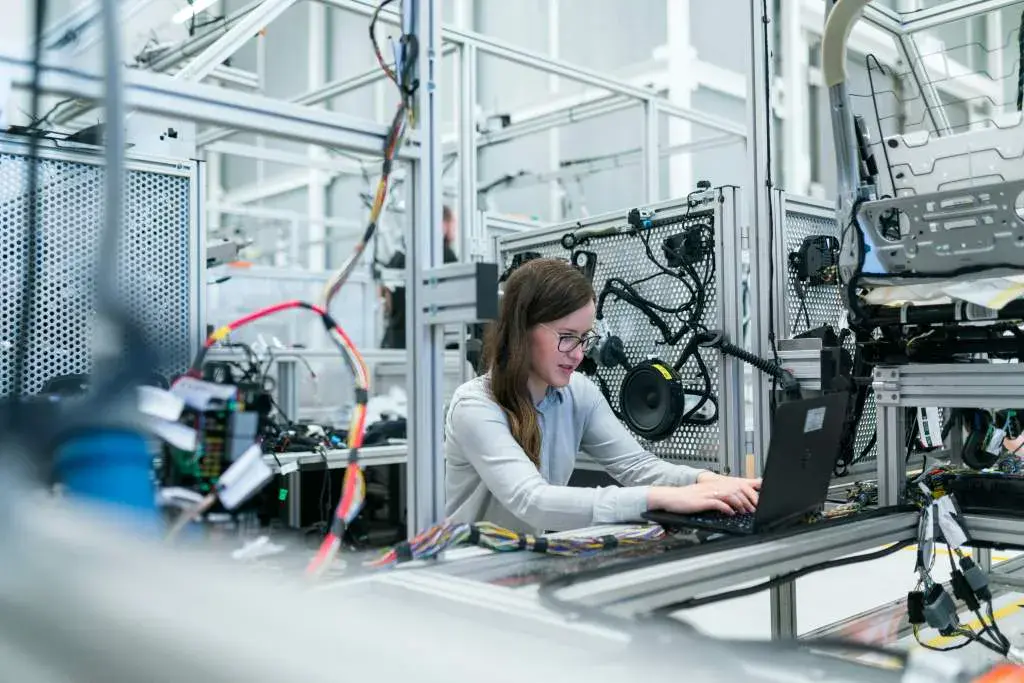
Image Copyright Areo-Mag
“The UK Digital Twin Centre brings together our technical expertise, facilities, and networks to unlock the power of deep technologies,” said Susan Bowen, CEO of Digital Catapult. “By connecting industries with cutting-edge technology through our programes, we are enabling businesses to harness the full potential of digital twins—driving operational efficiencies, advancing sustainability, and sharpening the competitive edge of UK businesses.”
The Centre’s collaborative model spans six technology pillars: intelligence, data services, immersive user experience, cyber-physical systems, integration, and security. This holistic approach ensures digital twins are not only innovative but also practical and interoperable, making Belfast a hub for scalable solutions.
Fast-Tracking Adoption with the Accelerator Programme
Applications for the Accelerator Programme will open in June 2025, with the programme commencing in January 2026. Targeting tech SMEs and industry leaders in aerospace, maritime, and defense, the programme offers mentorship, workshops, and Innovate UK funding to develop proofs of concept for technologies like IoT, data integration, and simulation tools. It bridges the gap between concept and deployment, a critical step for widespread adoption.
Dean Cook, executive director for place and global at Innovate UK, highlighted its significance: “Seeing real-world use cases coming to life at the UK Digital Twin Centre is a powerful demonstration of how digital twins can deliver tangible advances for UK industry. These cutting-edge tools will solve complex business challenges in aerospace, maritime, and defence.”
This initiative aligns with industry calls for collaboration. A 2025 white paper by the Digital Twin Consortium, published on April 17, emphasizes interoperable systems to maximize digital twin benefits, noting that standardized digital threads can streamline processes and cut costs. Belfast’s Centre, by uniting SMEs and industry giants, is poised to drive such solutions, amplifying the region’s role in global innovation.
Transforming Aerospace Manufacturing
The Centre’s impact on aerospace manufacturing is already evident. Spirit AeroSystems and Artemis Technologies participated in the Centre’s launch, illustrating the potential applications of digital twin technology in optimizing product design and supporting maritime decarbonization efforts.
Aerospace, responsible for roughly 2% of global CO2 emissions, faces intense pressure to innovate. Digital twins enable fuel-efficient designs and predictive maintenance, extending asset lifespans. The Centre’s focus on shared learnings ensures these advancements reach SMEs, vital to the UK’s manufacturing ecosystem. “The UK Digital Twin Centre marks a major step for Belfast, driving innovation in high-growth sectors like advanced manufacturing,” said Lord Mayor Councillor Micky Murray, underscoring the region’s strategic role.
Overcoming the Standardization Barrier
A key challenge for digital twins is the lack of unified standards, as noted in the Digital Twin Consortium’s 2025 report. This “standard gap” disrupts interoperability across 3D models, software, and data exchanges, especially in complex Systems of Systems like air traffic management. Belfast’s Centre tackles this by offering test environments to validate standardized frameworks.
Legacy systems, prevalent in aerospace, complicate integration, as many assets lack digital connectivity. The Accelerator Programme could be a testing ground for interoperable tools, fostering progress toward a cohesive digital architecture. The Consortium’s call for “cross-functional and tailorable standardisation” resonates with the Centre’s mission to harmonize data across stakeholders.
Securing the Digital Frontier
Cybersecurity is critical as digital twins rely on IoT devices and real-time data. The Digital Twin Consortium stresses that “cybersecurity needs to be baked into the digital twin from the onset” to prevent disruptions or safety risks. While the Centre emphasizes secure integration, specific practices like data encryption and zero-trust architectures are not detailed in available sources.
Recent industry moves toward certifications such as IEC 62443 underscore the importance of robust cybersecurity in digital twin ecosystems. By promoting these practices, the Centre builds trust, ensuring digital twins are both innovative and secure, a necessity for aerospace applications where breaches could have far-reaching consequences.
AI as a Future Catalyst
The article notes the absence of explicit AI integration initiatives at the Centre. While AI is a pertinent topic in digital twin development, current sources do not detail specific AI projects within the Centre.
However, AI’s lack of interpretability remains a hurdle, especially in safety-critical aerospace applications. The Centre’s role in testing these technologies could shape their practical deployment, aligning with Belfast’s forward-looking vision.
Belfast’s Global Impact
Belfast’s Digital Twin Centre is a regional triumph with global implications. Gartner projected that the simulation digital twin market would reach $35 billion by 2024, with expectations to grow to $379 billion by 2034. By positioning Belfast as a hub for aerospace innovation, the Centre strengthens the UK’s leadership in this space, with potential impacts on manufacturing, logistics, and smart cities worldwide.
Success depends on overcoming technical and cultural barriers. The Centre’s ability to connect SMEs with industry, provide practical tools, and advocate for standards will define its legacy. As Susan Bowen noted, “We are enabling businesses to harness the full potential of digital twins.” Belfast’s bold move could inspire a smarter, more sustainable industrial future, with the world watching its next steps.
More info here -Have a story? Address it to “the Editor” here
Disclaimer
The information provided in this article is for general informational purposes only and from publicly available sources. While we strive for accuracy, we do not make any representations or warranties, express or implied, regarding the completeness, reliability, or validity of the content. This article does not make any direct claims about specific companies, individuals, or organizations. Any references to reports or external sources are for context and do not imply endorsement or verification of any specific allegations. Readers are encouraged to conduct their own research and seek professional advice before making business decisions. We disclaim any liability for any losses or damages incurred as a result of reliance on the information provided.