Dubai AI Week – The National’s Visionary Report on Digital Twins Employees Reshaping The Future of the Workplace
Dubai AI Week – The National’s Visionary Report on Digital Twins Employees Reshaping The Future of the Workplace
In April 2025, The National, a leading voice in Middle Eastern journalism, published a groundbreaking report that captured the pulse of artificial intelligence’s (AI) transformative potential during Dubai AI Week. Titled “Dubai employees could soon have AI digital twins, conference hears,” the piece by Sarwat Nasir emerged from the Dubai AI Week, a global convergence of tech visionaries at the AI Assembly. This meticulously crafted report, rooted in exclusive insights from industry leaders, revealed Gartner’s prediction that AI-driven digital twins could begin reshaping workplace roles as early as 2027. The National’s incisive coverage not only spotlighted Dubai’s growing focus on AI as seen during Dubai AI Week, as reflected by initiatives like AI Week, signals its increasing engagement with the global AI community but also raised profound questions about identity, ethics, and the future of work in smart cities.
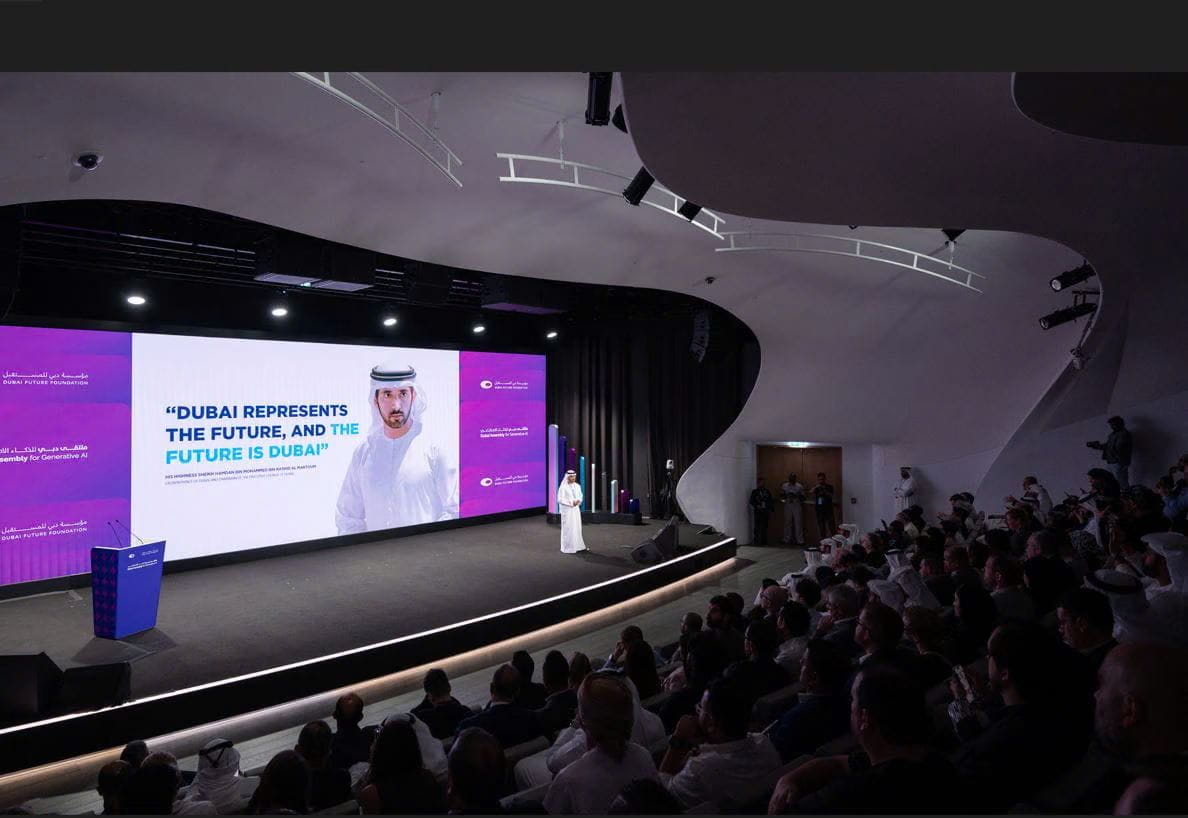
Image of Dubai AI Week Copyright Media Office
The even Dubai AI Week and the report’s significance lies in its ability to distill complex technological trends into a narrative that resonates with a global audience. By anchoring its analysis in the voices of experts like Joe Youssef Malek of Gartner and Dr. Patrick Noack of the Dubai Future Foundation, The National provided a window into the practical and philosophical implications of AI avatars. This article builds on their work, offering a third-person perspective that amplifies their findings while exploring the broader impact on urban development, smart cities, and IoT-driven ecosystems—sectors poised to shape the future of global enterprise.
Dubai AI Week – Digital Twins: A New Workforce Paradigm
During the Dubai AI Week event, The National’s report centers on a provocative prediction: digital twins could begin to emerge in Dubai’s workplaces by 2027, enabling employees to exist in multiple virtual spaces simultaneously. As Joe Youssef Malek, vice president for executive programs at Gartner, told The National, “We expect, with time, a digital AI image of yourself. So, imagine me talking to you right now while my AI avatar is having a different discussion with somebody else.” These avatars, trained on personal data, behavioral patterns, and communication histories, promise to act semi-independently, handling tasks from meetings to customer interactions.
Dubai AI Week’s and report’s vision aligns with Dubai’s broader smart city goals, though the report did not specifically detail the role of 5G/6G or IoT in digital twin integration. Outside the scope of The National’s report, digital twins are being explored by industry researchers for applications in logistics and construction. In theory, AI digital twins could be applied across industries—potentially including construction and smart buildings—though the report focused primarily on workplace and identity implications. Separate industry analyses suggest that Dubai’s expanding digital infrastructure may foster experimentation with AI-driven innovations, though this was not a focus of The National’s report.
Yet, the report doesn’t shy away from the technology’s complexities. Malek highlighted the legal and ethical challenges, noting that digital twins could “impact your brand” and necessitate new corporate contract terms to govern intellectual property. This foresight reflects The National’s commitment to balanced journalism, presenting not just the promise of AI but its potential pitfalls.
Dubai AI Week – Ethical Fault Lines in the AI Era
During the Dubai AI Week event, Dr. Patrick Noack’s reflections, as captured by The National, elevate the discussion to a philosophical plane. “I think the question is if you start licensing your persona and license the history of the persona… you are licensing individuals’ histories,” Noack said. His concern—that digital twins could blur the line between human identity and digital replication—strikes at the heart of AI’s societal impact. In smart cities, where digital twins of buildings and infrastructure already optimize urban systems, extending this technology to human identities raises unprecedented questions about autonomy and ownership.
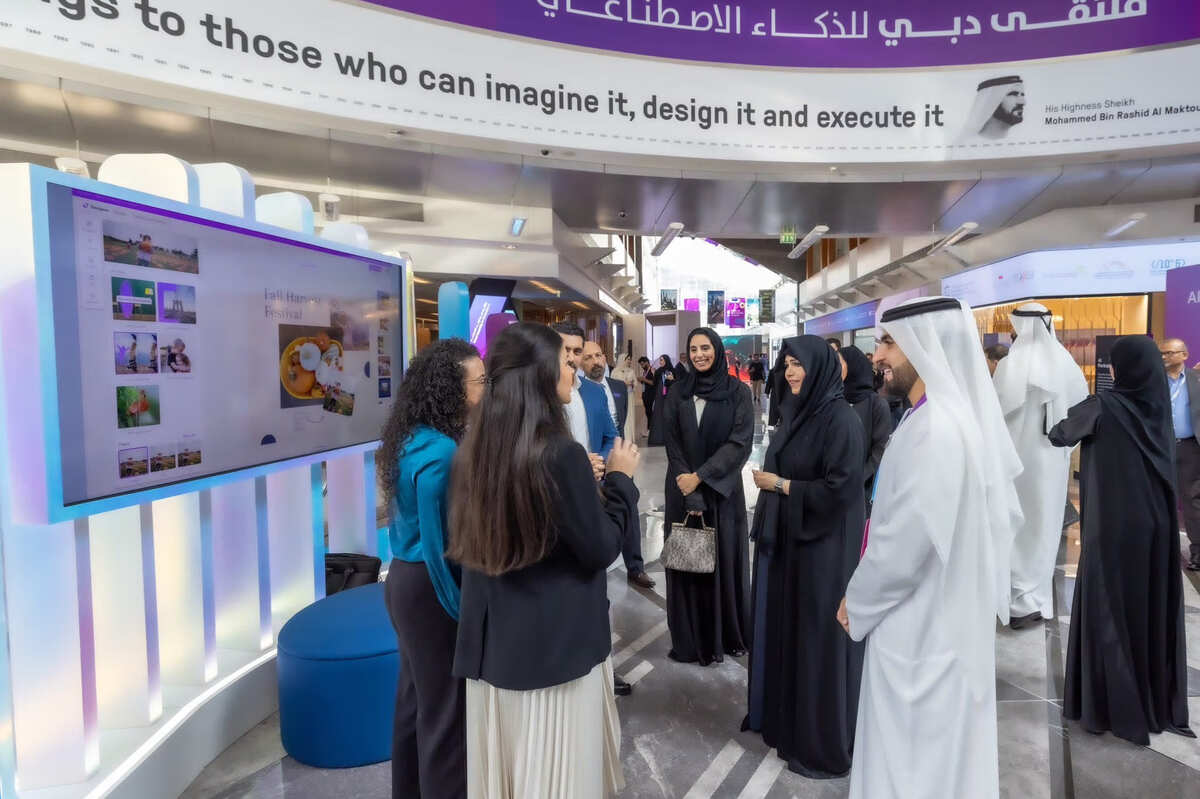
Image of Dubai AI Week Copyright Economy Middle East
Noack raised a speculative risk of digital avatars being trafficked on the dark web, prompting concern over potential misuse of personal AI representations. “Do I need to be employed by anyone else if that digital persona is going to be sold on the black market for a few Bitcoins?” he asked. This scenario, raised by Noack as a speculative risk, underscores the need for robust regulatory frameworks, particularly in regions like the UAE, where AI governance is a national priority. The National’s inclusion of such perspectives highlights its role as a thought leader, prompting readers to consider how smart cities must balance innovation with ethical safeguards.
While The National’s report during Dubai AI Week centered on workplace identity, similar concerns about AI governance could plausibly extend to sectors like manufacturing and logistics. As enterprises adopt AI avatars, they’ll need to navigate data privacy laws and cybersecurity risks, ensuring that IoT ecosystems remain secure. The National’s nuanced coverage sets the stage for policymakers and businesses to address these challenges proactively.
Dubai’s Role as a Global AI Hub
The National’s report is more than a snapshot of the Dubai AI Week event; it’s a testament to Dubai’s emergence as a global AI powerhouse. The Dubai AI Week, hosted by the Dubai Centre for Artificial Intelligence and the Dubai Future Foundation, featured global technology leaders and industry experts, signaling the emirate’s growing gravitational pull in the AI ecosystem.
For industries like construction and smart buildings, Dubai’s AI investments offer a blueprint. Although The National did not explore this, other industry analysts have discussed using digital twins for modeling building performance and optimizing supply chains. Such themes appear to align with broader UAE economic goals, including those outlined in its National Strategy for AI 2031.
The report portrays Dubai’s AI initiatives as case studies that may inform broader global developments. By documenting the city’s bold experiments, The National invites other nations to learn from its successes and challenges, fostering a dialogue on how technology can drive progress without compromising human values.
The National’s Journalistic Legacy
The National’s ability to produce such a report reflects its stature as a beacon of incisive journalism in the Middle East. Founded to provide clear, credible reporting, it has consistently tackled complex issues with clarity and depth. Its coverage of the AI Assembly exemplifies this mission, blending on-the-ground reporting with expert analysis to create a narrative that informs and inspires.
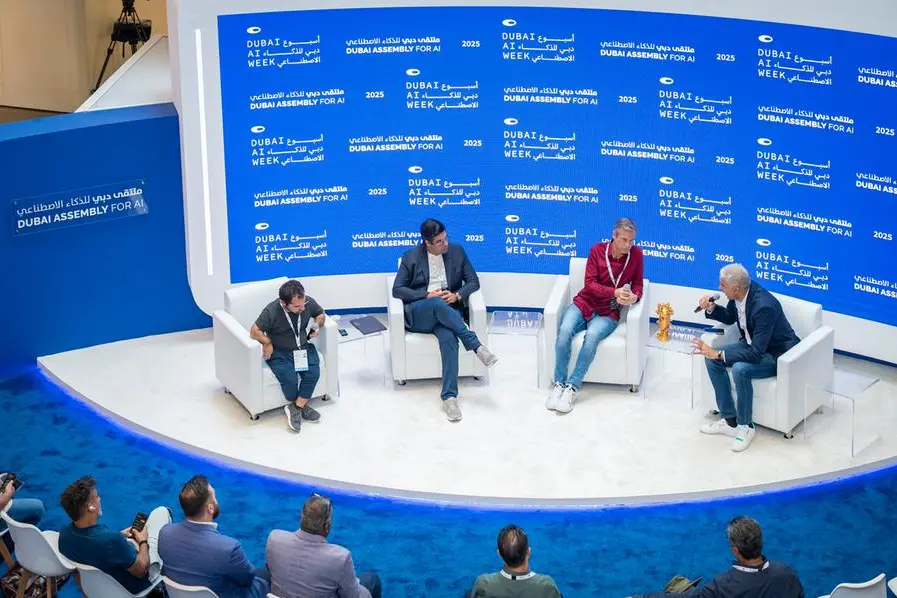
Image of Dubai AI Week Copyright Static Zawya
The report’s impact extends beyond its immediate findings. By amplifying voices like Malek and Noack, The National shapes the discourse on AI’s role in smart cities and beyond. Its commitment to exploring both the opportunities and risks of digital twins ensures that readers—whether policymakers, enterprise leaders, or tech enthusiasts—gain a holistic understanding of the stakes.
Looking Ahead: A Call for Responsible Innovation
As Dubai charges toward an AI-driven future, The National’s report serves as both a roadmap and a cautionary tale. While The National primarily addressed ethical and identity challenges, broader discourse around digital twins suggests potential productivity enhancements. Yet, the ethical, legal, and societal questions they raise demand urgent attention. In sectors like manufacturing, logistics, and urban development, where IoT and digital twins are already transformative, businesses must prioritize transparency and security.
The National’s report raises questions about innovation’s societal role, encouraging reflection on the balance between progress and governance. As smart cities evolve, the lessons from Dubai—captured so vividly in this report—will guide global efforts to harness AI responsibly. For now, The National stands as a vital voice, illuminating the path forward with clarity and courage.
More info here – Have a Story? Address it to the Editor and submit it here
Disclaimer
The information provided in this article is for general informational purposes only and from publicly available sources. While we strive for accuracy, we do not make any representations or warranties, express or implied, regarding the completeness, reliability, or validity of the content. This article does not make any direct claims about specific companies, individuals, or organizations. Any references to reports or external sources are for context and do not imply endorsement or verification of any specific allegations. Readers are encouraged to conduct their own research and seek professional advice before making business decisions. We disclaim any liability for any losses or damages incurred as a result of reliance on the information provided.