Fujitsu and RIKEN 256-Qubit Quantum Leap: Redefining Computational Frontiers
Fujitsu and RIKEN 256-Qubit Quantum Leap: Redefining Computational Frontiers
On April 21, 2025, Fujitsu Limited and RIKEN unveiled a 256-qubit superconducting quantum computer at the RIKEN RQC-Fujitsu Collaboration Center in Wako, Japan, marking a significant milestone in the global race for quantum leadership. This system, a fourfold leap from their 64-qubit predecessor launched in October 2023, integrates cutting-edge high-density implementation and advanced thermal design to push the boundaries of quantum computing.
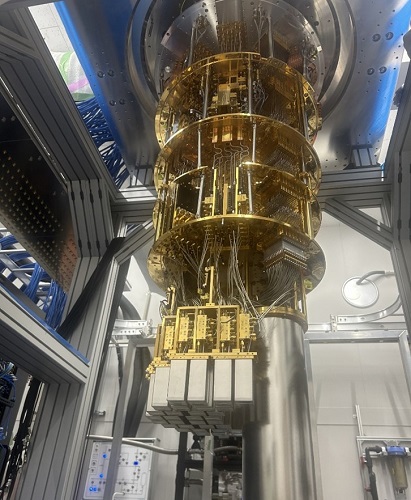
Figure1: Newly developed 256-qubit superconducting quantum computer
Supported by Japan’s Ministry of Education, Culture, Sports, Science and Technology, the achievement signals a bold step toward practical quantum applications, with implications for industries like manufacturing, logistics, and smart cities. As the technology prepares for global access in early 2025, it raises critical questions about its potential to reshape computational paradigms and the challenges that lie ahead.
A Quantum Milestone: The 256-Qubit Breakthrough
Their latest quantum computer is a testament to engineering precision. Built on superconducting qubits—circuits that operate at near-absolute zero to eliminate electrical resistance—the system quadruples the qubit count of its 64-qubit predecessor. According to Fujitsu’s press release, the machine employs a scalable 3D connection structure, arranging 4-qubit unit cells in a three-dimensional configuration. This design, which mirrors the architecture of the earlier model, demonstrates remarkable scalability without requiring complex redesigns. “The 256-qubit machine utilizes the same unit cell design established in its 64-qubit predecessor,” Fujitsu noted, highlighting the efficiency of this approach.
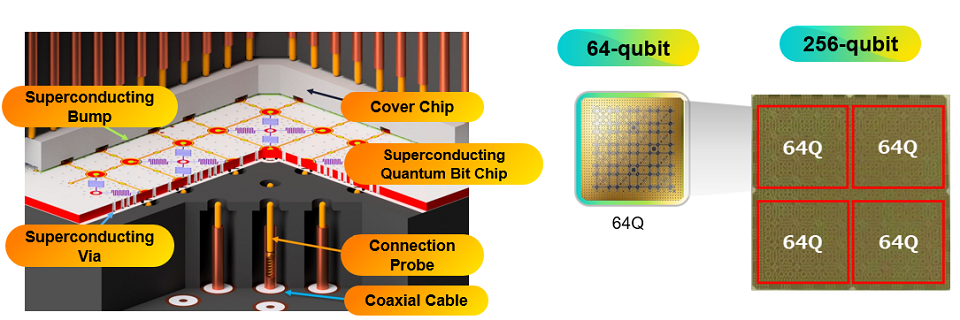
Figure 2: 3D connectivity and scalability up to 256 qubits
A key technical hurdle was maintaining ultra-low temperatures within the dilution refrigerator, essential for superconducting qubits. Both giants overcame this through high-density implementation and optimized thermal design, quadrupling the qubit density within the same cooling unit. This balance of heat generation from control circuits and the refrigerator’s cooling capacity ensures the system’s stability at temperatures colder than outer space. Such advancements are critical for scaling quantum systems, where even minor thermal fluctuations can disrupt qubit coherence.
The system’s debut is not just a hardware triumph but a strategic one. Starting in the first quarter of fiscal 2025,It is said that they will integrate the 256-qubit computer into their hybrid quantum computing platform, making it available to global companies and research institutions. This move positions Japan as a leader in the quantum race, competing with efforts like China’s Zuchongzhi-3, a 105-qubit system detailed in Physical Review Letters (March 7, 2025), and Microsoft’s Majorana 1, an eight-qubit topological chip unveiled in February 2025.
Decoding the Technology: Superconducting Qubits in Context
To understand the significance of Today’s news achievement, it’s worth unpacking the technology. Superconducting qubits, the backbone of their system, are crafted from materials like niobium or aluminum, cooled to millikelvin temperatures to achieve superconductivity. Unlike classical bits, which represent either 0 or 1, qubits leverage quantum properties like superposition—existing in multiple states simultaneously—and entanglement, where qubits are correlated regardless of distance. This allows quantum computers to process vast datasets in parallel, tackling problems intractable for classical systems.
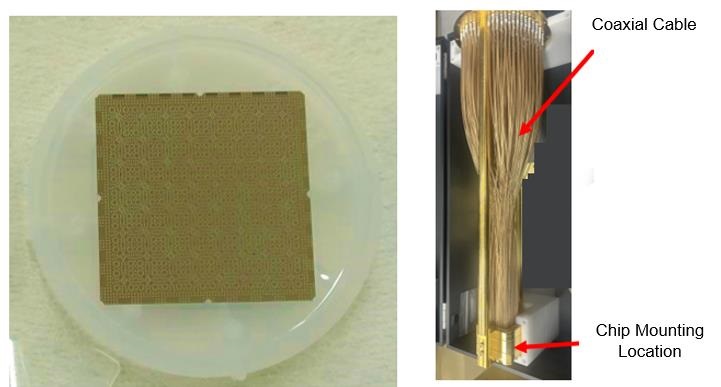
Figure 3: 256-qubit chip and sample package for 3D connection structure
Compared to other quantum approaches, superconducting qubits offer distinct advantages. For instance, China’s Zuchongzhi-3, also superconducting, boasts a coherence time of 72 microseconds and high gate fidelities (99.90% for single-qubit gates), enabling it to outperform classical supercomputers in a benchmark random circuit sampling task, exceeding Google’s Sycamore in speed by several orders of magnitude—though such tasks are not universally representative of real-world performance. While Zuchongzhi-3 has published benchmark metrics, these tech giants have yet to release detailed performance data, such as coherence times or gate fidelities, for the 256-qubit system. In contrast, Microsoft’s Majorana 1 uses topological qubits, which prioritize error resistance over raw qubit count. As Chetan Nayak of Microsoft told Nature, topological qubits aim for stability, but their eight-qubit system lags behind in scale compared to Fujitsu’s 256 qubits.
D-Wave Quantum Inc., another player, focuses on quantum annealing with its 5,000-qubit Advantage system, optimized for specific optimization tasks rather than general-purpose computing. As previously covered in a Hiverlab article (March 7, 2025), based on D-Wave’s official announcement, D-Wave’s system has driven results for clients like NTT DOCOMO, improving mobile network performance by 15%. However, its annealing approach is less versatile than the gate-based systems of Fujitsu, RIKEN, or China’s USTC, which target a broader range of applications.
Industry Implications: Manufacturing, Logistics, and Beyond
The 256-qubit system’s integration into Fujitsu’s hybrid quantum-classical platform is poised to unlock new possibilities across industries. In manufacturing, quantum computing can revolutionize materials science and process optimization. As previously covered in a Hiverlab article (March 31, 2025), based on Qolab’s official announcements, quantum systems like Qolab’s superconducting qubits enable molecular simulations at an atomic level, potentially accelerating the development of lightweight alloys for electric vehicles or sustainable polymers. Fujitsu’s platform, with its enhanced qubit count, could simulate larger molecules, reducing R&D timelines and fostering eco-conscious innovation.
Logistics stands to gain from quantum’s optimization prowess. The 256-qubit system’s ability to handle complex algorithms could refine supply chain routing, minimizing energy use and costs. For instance, Fujitsu’s Quantum Simulator Challenge 2024, as previously covered in a Hiverlab article (March 31, 2025), based on Fujitsu’s official announcement, showcased a project from Delft University that optimized shift scheduling for automotive assembly using 39 qubits. Scaling to 256 qubits could tackle even larger datasets, streamlining operations in smart factories or global logistics networks.
Smart cities, a growing focus for quantum applications, could also benefit. Quantum-enhanced digital twins—virtual models of urban systems—could optimize energy grids or traffic flows with unprecedented precision. India’s National Quantum Mission, as previously covered in a Hiverlab article (April 14, 2025), based on official statements from India’s government, is exploring quantum’s role in IoT networks for urban planning. Fujitsu’s hybrid platform, blending quantum and classical computing, could integrate with 5G/6G networks to enable real-time simulations, enhancing sustainability in urban development.
Global Context: A Competitive Quantum Landscape
Their breakthrough arrives amid a fiercely competitive global quantum race. China’s Zuchongzhi-3 has set a high bar for computational performance with its benchmark achievements. As Zhu Xiaobo of USTC told NDTV, their focus on error correction aims for fault-tolerant systems, a goal Fujitsu and RIKEN share with their planned 1,000-qubit computer by 2026. Meanwhile, Microsoft’s Majorana 1, backed by DARPA, prioritizes stability over scale, with CEO Satya Nadella projecting utility by 2027-2029.
India and the Netherlands, as previously covered in a Hiverlab article (April 14, 2025), based on official announcements from India’s and the Netherlands’ quantum initiatives, are also advancing quantum initiatives. India’s ITES-Q strategy emphasizes global standards, while the Netherlands’ Delft hub doubles testing capacity for quantum chips. These efforts complement Fujitsu’s work, suggesting potential for collaboration, such as leveraging Delft’s facilities to refine superconducting qubits.
However, challenges persist. Scalability remains a hurdle; even 256 qubits fall short of the millions needed for broad industrial impact. Error correction, critical for reliable quantum computing, is still nascent. Workforce shortages, as highlighted in Hitachi’s 2025 study, and high costs from cryogenic infrastructure further complicate adoption. Fujitsu’s commitment to R&D through 2029, with a new facility at Fujitsu Technology Park, signals a long-term vision to address these barriers.
The Road Ahead: Opportunities and Responsibilities
Looking forward, Fujitsu’s 256-qubit system could redefine computational norms, but its success hinges on practical deployment. The hybrid platform’s ability to integrate quantum and classical algorithms offers a pragmatic bridge, enabling enterprises to experiment without abandoning existing infrastructure. Fields like finance and drug discovery, cited by Fujitsu, could see early wins—quantum algorithms might optimize portfolios or simulate protein interactions faster than classical systems.
Sustainability is a critical lens. Quantum computing’s energy demands, driven by cryogenic cooling, pose environmental challenges. Fujitsu’s optimized thermal design is a step toward efficiency, but broader adoption will require greener solutions. As previously covered in a Hiverlab article (April 9, 2025), based on announcements from Origin Quantum Computing Technology Co., quantum-AI hybrids could reduce AI’s carbon footprint, a model Fujitsu might emulate.
Speculatively, combining quantum with AI could enhance digital twins for smart buildings, optimizing energy use in real time. Such ideas, while unproven, align with Fujitsu’s sustainability mission, as outlined in their commitment to the Sustainable Development Goals. Policymakers must also address ethical concerns, like quantum’s potential to break encryption, necessitating post-quantum cryptography by 2035, per the UK’s NCSC.
Conclusion: A Quantum Future Takes Shape
These Tech giant’s 256-qubit superconducting quantum computer is more than a technical feat; it’s a beacon of what’s possible when innovation meets ambition. By scaling qubits, optimizing cooling, and embracing hybrid computing, they’ve laid a foundation for industries to reimagine efficiency and sustainability. As Hideto Okada of Fujitsu stated in a press release reported by Global Times, “We recognize a significant expectation for quantum simulators, which serve as platforms for the practical application and testing of quantum algorithms.” This system is poised to meet that expectation, driving progress in manufacturing, logistics, and smart cities.
Yet, the quantum horizon is vast and uncharted. With global competitors like China, Microsoft, and D-Wave pushing boundaries, F&R must navigate technical and ethical challenges to maintain their edge. For now, their 256-qubit leap invites enterprises to join a transformative journey—one where computational limits are redefined, and a sustainable future feels within reach.
About Fujitsu
Fujitsu’s purpose is to make the world more sustainable by building trust in society through innovation. As the digital transformation partner of choice for customers in over 100 countries, our 124,000 employees work to resolve some of the greatest challenges facing humanity. Our range of services and solutions draw on five key technologies: Computing, Networks, AI, Data & Security, and Converging Technologies, which we bring together to deliver sustainability transformation. Fujitsu Limited (TSE:6702) reported consolidated revenues of 3.7 trillion yen (US$26 billion) for the fiscal year ended March 31, 2024, and remains the top digital services company in Japan by market share. Find out more: www.fujitsu.com.
About RIKEN
RIKEN, a National Research and Development Agency, is Japan’s largest comprehensive research institution renowned for high-quality research in a diverse range of scientific disciplines. Founded in 1917, initially as a private research foundation, RIKEN has grown rapidly in size and scope, today encompassing a network of world-class research centers and institutes across Japan. Website: www.riken.jp/en/.
More Info here – To submit a story to us, address it to “the Editor” here
Image copyright at Source (Fujitsu)
Disclaimer
The information provided in this article is for general informational purposes only and is derived from publicly available sources. While every effort is made to ensure accuracy, we make no representations or warranties, express or implied, regarding the completeness, reliability, or validity of the content. This article does not assert or verify any claims about specific companies, individuals, or organizations. References to external reports, studies, or sources are for contextual purposes only and do not imply endorsement or confirmation of any specific allegations. Readers are advised to conduct their own due diligence and seek professional advice before making business or investment decisions. We disclaim any liability for losses or damages incurred as a result of reliance on the information provided.