Ohio University, HTC VIVE, and Virtualware Launch DEC to Drive Manufacturing Innovation
Ohio University, HTC VIVE, and Virtualware Launch DEC to Drive Manufacturing Innovation – A Transformative Leap for Ohio’s Industry
Ohio, a cornerstone of American manufacturing, is advancing its industrial landscape through a pioneering partnership. On May 5, 2025, Ohio University, in collaboration with HTC VIVE and Virtualware, will launch the Digital Enterprise Collaboratory (DEC), a state-of-the-art hub designed to harness extended reality (XR) technologies for advanced manufacturing, research, and workforce development. Rooted in Ohio’s industrial heritage, this initiative marks a significant stride toward immersive digital engineering, reinforcing Ohio’s ambition to lead in the digital age of manufacturing.
The DEC integrates HTC’s industry-leading XR hardware with Virtualware’s VIROO enterprise platform, creating a shared digital infrastructure that connects Ohio University’s campuses in Athens and Dayton. This enables real-time, 3D collaboration among university researchers, industry partners like Intel, and government entities such as the U.S. Air Force Research Laboratories (AFRL), without the need for physical travel. “Ohio University is positioning itself as a leader in Industry 4.0,” said Daniel O’Brien, President Americas at HTC VIVE, in a May 1, 2025, statement on the VIVE Team blog. The hub, he noted, places immersive technology at the core of innovation and education.
Addressing Ohio’s Manufacturing Needs
Ohio’s manufacturing sector, which accounts for 17.5% of the state’s GDP, is evolving rapidly. The establishment of advanced technology factories by companies like Intel and Anduril is driving demand for an estimated 7,000 new workers, according to Ohio University’s official announcement on the DEC. The Collaboratory is well-positioned to meet this demand by enhancing Ohio University’s training and certification programs with immersive simulations and digital twins.
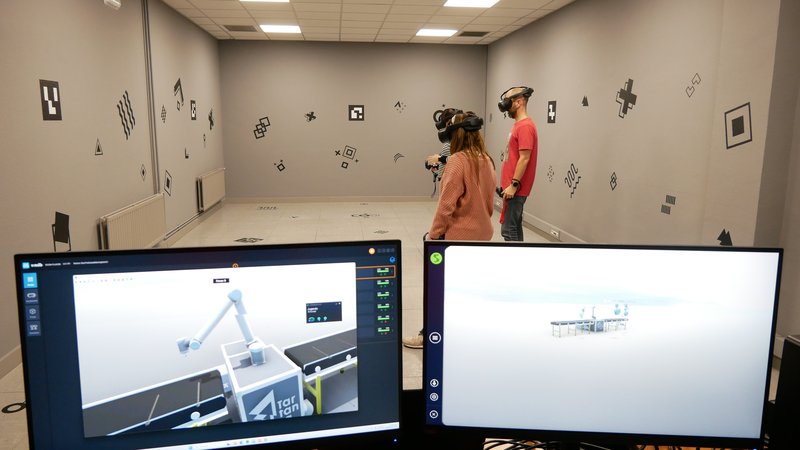
“By integrating XR technology into our educational and research programs, we are preparing the next generation of engineers to think spatially, act collaboratively, and solve real-world problems,” said Scott Miller, Associate Dean for Industry Partnerships at Ohio University’s Russ College of Engineering and Technology, in a May 1, 2025, Ohio University press release. The DEC’s immersive simulations enable trainees to practice complex industrial tasks—such as optimizing manufacturing workflows or refining logistics processes—in a virtual environment, minimizing the costs and risks of physical prototyping.
The hub’s infrastructure includes fully equipped VR labs in Athens and Dayton, designed for versatility. Users can collaborate on product designs, test prototypes, or develop digital twins in real time, whether on-site or remotely. “Our VIROO platform integrated with HTC’s XR solutions provides Ohio University with infrastructure that can be used for many different purposes and for many years to come,” said John Cunningham, President of Virtualware USA, in the same Ohio University release.
Enabling Remote Collaboration
The DEC’s strength lies in its ability to connect diverse stakeholders in a unified digital space. Powered by the VIROO platform, the hub facilitates collaboration among Ohio University’s researchers, industry partners, and government agencies. Engineers in Athens can collaborate remotely with partners, including Dayton-based AFRL teams and industry stakeholders, to refine ideas and development workflows within a shared virtual environment.
This capability addresses a key challenge in manufacturing: geographic separation. Traditional collaboration often requires time-consuming travel or delays in sharing physical prototypes. The DEC’s virtual labs overcome these barriers, enabling instantaneous feedback and iteration. “This program represents a bold step forward in immersive digital engineering,” Miller stated, emphasizing the hub’s role in fostering spatial thinking and collaborative problem-solving.
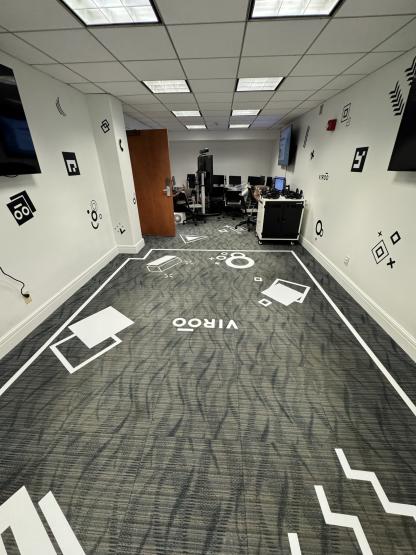
The Digital Enterprise Collaboratory lab in Athens Ohio. Image Copyright Ohio University.
The DEC’s launch aligns with the Dayton Digital Transformation Summit, a regional event focused on manufacturing innovation and workforce development. The Dayton lab, located within the Digital Transformation Center (DTC) and operated by the University of Dayton Research Institute (UDRI), will open on May 7, 2025, during the summit’s evening event. This timing highlights the hub’s mission to foster cross-sector collaboration and strengthen Ohio’s position in advanced manufacturing.
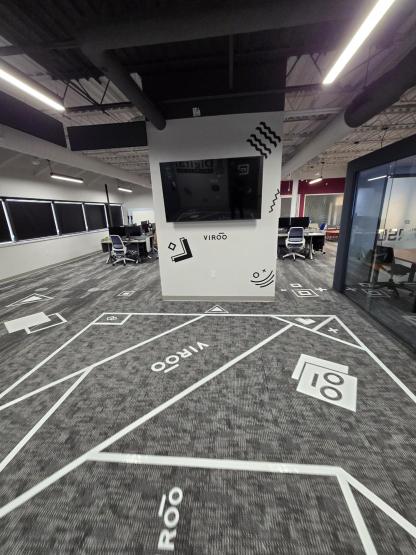
The Digital Enterprise Collaboratory lab in Athens Ohio. Image Copyright Ohio University.
Advancing Sustainable Manufacturing
The DEC offers a framework for efficient and sustainable industrial practices. By leveraging digital twins and XR simulations, manufacturers can optimize production processes, reduce material waste, and enhance energy efficiency. For instance, digital twin environments can support planning and optimization of production workflows, improving operational efficiency before physical implementation. This aligns with widely discussed efforts in the manufacturing sector to improve efficiency and sustainability through smart technologies.
The DEC’s workforce development initiatives also support equitable economic growth. Ohio’s manufacturing sector has historically been a driver of middle-class prosperity, but the transition to high-tech production poses challenges for some workers. By offering accessible, immersive training programs, the DEC ensures that local communities can participate in the state’s industrial evolution, providing a model for inclusive workforce development.
A Model for Collaborative Innovation
The DEC exemplifies how academic institutions, technology providers, and industry partners can collaborate to address manufacturing challenges. Its partnership structure—combining Ohio University’s engineering expertise, HTC’s XR technology, and Virtualware’s VIROO platform—demonstrates a collaborative model that integrates immersive tools into education and industry. The initiative also underscores the integration of XR technologies into practical industrial use cases.
Scaling immersive training programs, however, requires significant investment in hardware, software, and instructor training. Ensuring equitable access, particularly for rural or underserved communities, will be critical to the DEC’s long-term success. Additionally, integrating XR into existing workflows may face resistance from those accustomed to traditional methods.
A Beacon for Industrial Progress
The Digital Enterprise Collaboratory is a strategic investment in Ohio’s industrial future, blending advanced technology with a commitment to education and collaboration. By equipping the state’s workforce with the skills to thrive in a digital economy, the DEC is preparing engineers for new factories while fostering a more connected, efficient, and sustainable manufacturing ecosystem.
As the hub opens in Athens and Dayton, its progress will be closely observed by industry leaders, policymakers, and educators. The DEC offers an example of how academic–industry collaborations are addressing industrial transformation through digital innovation, reinforcing Ohio’s ambition to lead in the digital age of manufacturing.
More info here – Submit a story to us address to “the Editor” here
Disclaimer
The information provided in this article is for general informational purposes only. While we strive for accuracy, we do not make any representations or warranties, express or implied, regarding the completeness, reliability, or validity of the content. This article does not make any direct claims about specific companies, individuals, or organizations. Any references to reports or external sources are for context and do not imply endorsement or verification of any specific allegations. Readers are encouraged to conduct their own research and seek professional advice before making business decisions. We disclaim any liability for any losses or damages incurred as a result of reliance on the information provided.