Saudi Arabia’s AI Leap: NVIDIA Partnership With Humain Drives Vision 2030
Saudi Arabia’s AI Leap: NVIDIA Partnership With Humain Drives Vision 2030
Announced recently, Saudi Arabia’s strategic partnership with NVIDIA, the global leader in accelerated computing, marks a bold advance in its ambition to lead in artificial intelligence. Led by HUMAIN, a subsidiary of the Public Investment Fund, this initiative focuses on building AI factories, deploying digital twin technologies, and training thousands in advanced tech skills. As a cornerstone of Vision 2030, the Kingdom’s plan to diversify its oil-reliant economy, the collaboration leverages NVIDIA’s GPUs and Omniverse platform to advance manufacturing, logistics, smart cities, and sustainability.
Scaling AI Infrastructure
HUMAIN’s plan centers on constructing AI factories with a projected 500-megawatt capacity, powered by hundreds of thousands of NVIDIA’s advanced GPUs over five years. The initial phase deploys an 18,000 NVIDIA GB300 Grace Blackwell AI supercomputer with InfiniBand networking, a significant deployment of NVIDIA’s latest technology. “AI, like electricity and internet, is essential infrastructure for every nation,” said Jensen Huang, NVIDIA’s founder and CEO, per HPCwire.
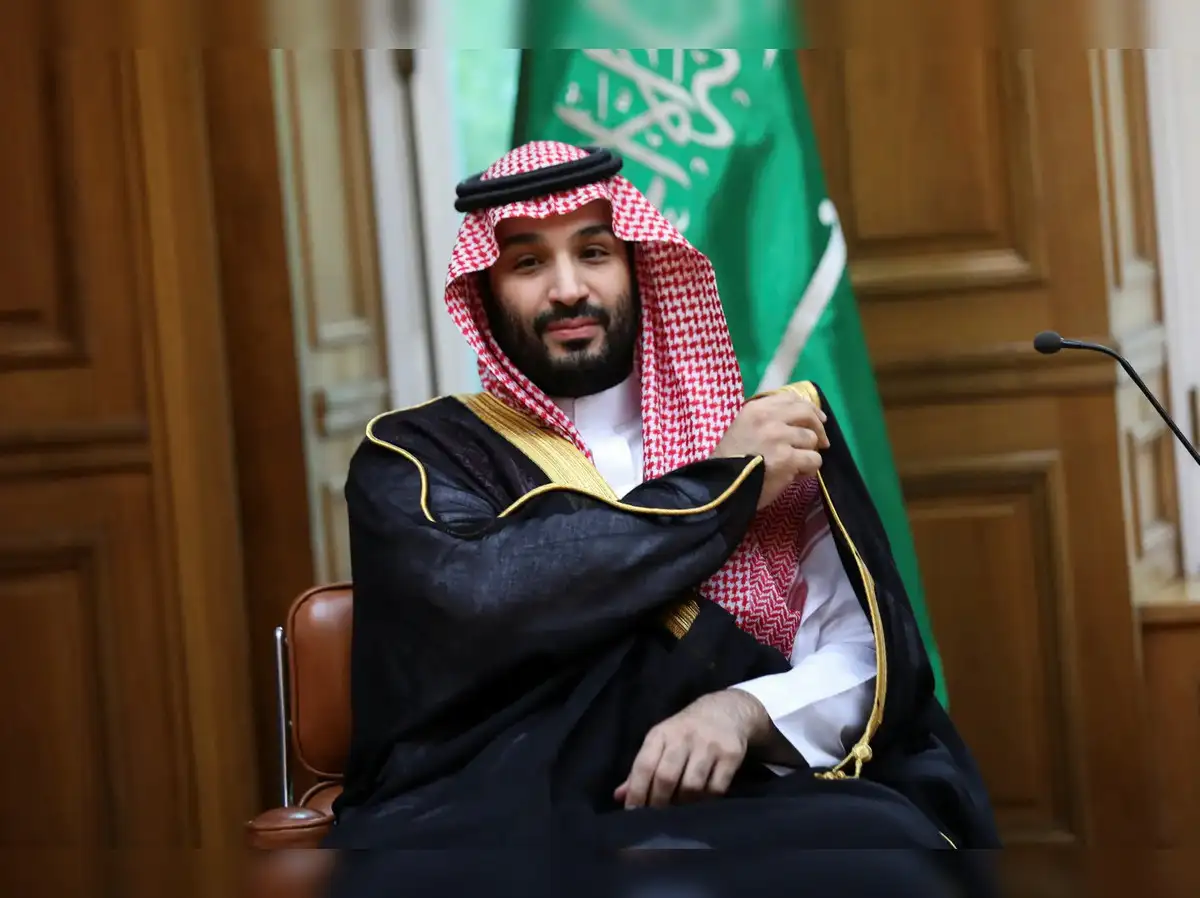
Image of the Saudi Crown Princess sitting on chair launching Humain – Source Economic Times
These data centers will provide infrastructure designed to support the training of sovereign AI models, benefiting industries vital to Saudi Arabia, where oil has historically accounted for approximately 43% of GDP and 75% of fiscal revenue, according to IMF and World Bank estimates cited by Reuters. In manufacturing, AI can improve production efficiency. In logistics, predictive analytics can streamline supply chains, reducing energy use. While HUMAIN’s investment is substantial, specific funding details have not been confirmed in the announcements.
With growing solar energy capacity, Saudi Arabia is positioned to power these facilities sustainably, aligning with Vision 2030’s environmental goals and offering a model for global AI infrastructure.
Digital Twins: Advancing Industry and Urban Systems
The partnership introduces NVIDIA’s Omniverse platform as a multi-tenant system to pioneer physical AI and digital twins—virtual replicas of physical environments. “This lays the groundwork for a new industrial revolution, anchored in advanced infrastructure, talent and global ambition,” said His Excellency Eng. Abdullah Alswaha, Minister of Communications and Information Technology, per StockTitan.
Digital twins have the potential to enhance key sectors. In manufacturing, they can predict equipment failures, reducing downtime. In logistics, they optimize routes, lowering emissions. For smart city projects like NEOM, digital twins support data-driven urban planning, improving efficiency. These efforts bolster Saudi Arabia’s push toward Industry 4.0, integrating IoT and AI to modernize industrial and urban frameworks.
Sustainability is a key benefit. Digital twins can reduce waste in resource-intensive sectors, supporting Saudi Arabia’s 2060 net-zero emissions goal and setting a global standard for eco-friendly innovation.
Training a Tech Workforce
A robust AI ecosystem demands skilled talent. NVIDIA and HUMAIN will train thousands in AI, robotics, and digital twin technologies, while the Saudi Data & AI Authority (SDAIA) aims to prepare 25,000 AI specialists by 2030, including 5,000 scientists, per public announcements cited by Reuters. “Our partnership with NVIDIA is a bold step forward in realizing the Kingdom’s ambitions to lead in AI and advanced digital infrastructure,” said Tareq Amin, CEO of HUMAIN, per StockTitan.
These programs address challenges noted by Reuters: “There’s a way to turn these visions into reality—but that depends on attracting the necessary brainpower.” Innovations like Arabic language AI models could improve efficiency in healthcare and logistics, with potential global applications.
Navigating Geopolitical and Economic Challenges
The partnership’s announcement aligns with the Saudi-U.S. investment forum on May 13, 2025, where tech leaders such as Elon Musk were reportedly expected, according to preliminary Reuters coverage, though attendance was not officially confirmed. “AI is expected to be a major discussion point,” the outlet noted, reflecting Saudi Arabia’s push for global tech collaborations. Investments from Salesforce ($500 million) and firms like Google signal confidence in the Kingdom’s tech potential.
Reliance on NVIDIA’s GPUs poses risks in a competitive AI landscape, and U.S.-China tech tensions could impact semiconductor access. Vision 2030 has faced hurdles, with foreign direct investment reaching $5.5 billion in 2020 against a $19 billion target, per Reuters, highlighting execution challenges.
Ethics and Sustainability Priorities
SDAIA’s focus on ethical AI governance aims to build trust, addressing labor condition concerns in Vision 2030 projects raised by human rights groups. “Saudi Arabia is not in the business of showmanship, we’re in the business of committing and delivering,” said Minister Alswaha, per Reuters.
Sustainability is integral. Solar-powered data centers and AI-optimized industries align with global environmental goals, reducing waste in manufacturing and logistics and positioning Saudi Arabia as a leader in sustainable AI.
A Rising Tech Power
Saudi Arabia’s NVIDIA partnership underscores its ambition to lead in AI and digital infrastructure. By building AI factories, advancing digital twins, and fostering talent, the Kingdom is laying a foundation for a tech-driven economy with potential to enhance manufacturing, logistics, and smart cities. Saudi Arabia is working to strengthen its global position in AI innovation, with execution and ethical governance as critical tests.
Word count: 905ce in OroraTech’s leadership in climate tech, signaling a new era in wildfire management.
More info here -Have a story? Address it to “the Editor” here
Features Image copyright Economic Times
Disclaimer
The information provided in this article is for general informational purposes only and from publicly available sources. While we strive for accuracy, we do not make any representations or warranties, express or implied, regarding the completeness, reliability, or validity of the content. This article does not make any direct claims about specific companies, individuals, or organizations. Any references to reports or external sources are for context and do not imply endorsement or verification of any specific allegations. Readers are encouraged to conduct their own research and seek professional advice before making business decisions. We disclaim any liability for any losses or damages incurred as a result of reliance on the information provided.